Ceremonial Matcha in Malta: How to Choose Matcha That Is Actually Worth Drinking

Not every green powder labelled “ceremonial matcha” offers the same experience.
As matcha becomes increasingly popular in Malta, more products are appearing online, in cafés and on shop shelves. That’s good news for matcha lovers, but it also makes choosing genuinely enjoyable matcha surprisingly complicated.
Beautiful packaging helps. The word premium helps even more, apparently. But neither tells you what the matcha inside will actually taste like.
At Matcha Malta by Greenhouse Malta, we believe the best way to choose matcha is to understand what you’re looking at, what you’re tasting and, most importantly, how you intend to drink it.
So let’s talk about what really matters.
What Does Ceremonial Matcha Actually Mean?
You’ll see the term ceremonial grade matcha everywhere.
It generally refers to matcha intended to be enjoyed primarily as tea, particularly whisked with water, rather than being used mainly as an ingredient for baking or cooking.
But there’s an important detail.
The words ceremonial grade alone don’t guarantee that two matchas will have the same colour, texture, aroma, sweetness or level of umami.
That’s why we prefer looking beyond the label.
When we’re evaluating matcha, the question isn’t simply:
“Is this ceremonial?”
It’s:
“Would we actually enjoy drinking this with water?”
That’s a much more useful standard.
1. Start With the Colour
Colour is one of the first things people notice about matcha.
Quality Japanese matcha commonly displays a bright, vivid green colour, although the precise shade naturally varies.
A dull, yellowish or brownish powder may indicate differences in quality, processing, storage or age.
But don’t turn colour into the only test.
A photograph can be edited. Lighting can dramatically alter green tones. Your phone screen can make almost anything look radioactive if somebody pushes the saturation hard enough.
Colour is an indicator, not a certificate of greatness.
2. Texture Matters More Than People Think
Matcha should be extremely finely ground.
When you handle a fine matcha powder, its texture should feel soft and delicate rather than coarse.
That fineness matters when you prepare it.
Properly whisked matcha should create a smooth suspension with a pleasant mouthfeel. A beautifully fine powder contributes to the silky texture associated with good ceremonial matcha.
This is one reason we recommend sifting matcha before whisking.
Those annoying little clumps are not a character-building exercise.
3. Understand Umami
If you’ve started exploring higher-quality matcha, you’ve probably encountered the word umami approximately seventeen thousand times.
But what does it mean in matcha?
Umami is the savoury, rounded taste sensation associated with certain amino acids naturally present in tea.
In a refined matcha, umami can create a sense of depth, richness and fullness that balances vegetal notes and bitterness.
Some people want an intense umami experience.
Others prefer something lighter and fresher.
Neither preference is wrong.
That’s precisely why our Matcha Malta collection contains different profiles instead of pretending there is one objectively perfect bowl for everybody.
4. Good Matcha Doesn’t Need to Be Aggressively Bitter
Matcha naturally has some bitterness and astringency.
The problem begins when bitterness dominates everything else.
A balanced ceremonial matcha can combine vegetal character, sweetness, umami and gentle bitterness without one element completely overwhelming the cup.
Preparation also matters enormously.
If you’ve just poured boiling water onto expensive ceremonial matcha and discovered something resembling liquefied lawn clippings, the matcha may not be the only suspect.
Try again at a lower temperature.
5. Water Temperature Can Transform Your Matcha
For our ceremonial matchas, we generally recommend approximately 70–80°C water as a starting point.
Sift around 1.5–2 g of matcha into your bowl and add approximately 60–70 ml of water.
Whisk briskly until you create a fine foam.
Then experiment.
Slightly cooler water can emphasise sweetness and softness. Changing the amount of powder or water alters intensity.
There isn’t much point buying excellent matcha and then preparing every variety identically without ever adjusting anything.
Part of discovering matcha is learning what you prefer.
6. Matcha for Water and Matcha for Lattes Aren’t Necessarily the Same
This distinction matters enormously when choosing matcha in Malta.
Milk changes the experience.
A matcha latte needs enough flavour to remain expressive once milk is added. A delicate matcha that tastes beautiful with water can become almost invisible in a large latte.
Conversely, a matcha designed primarily to punch through milk may not deliver the refined experience somebody expects when drinking it traditionally.
Before buying, decide what you’re actually going to make.
At Matcha Malta, we want that purpose to be obvious on our product pages.
Our Approach: Different Matcha for Different Rituals
Rather than selling several tins that all claim to be “the ultimate premium ceremonial matcha”, we’ve built our collection around distinct experiences.
Because that sentence would become rather embarrassing by tin number three.
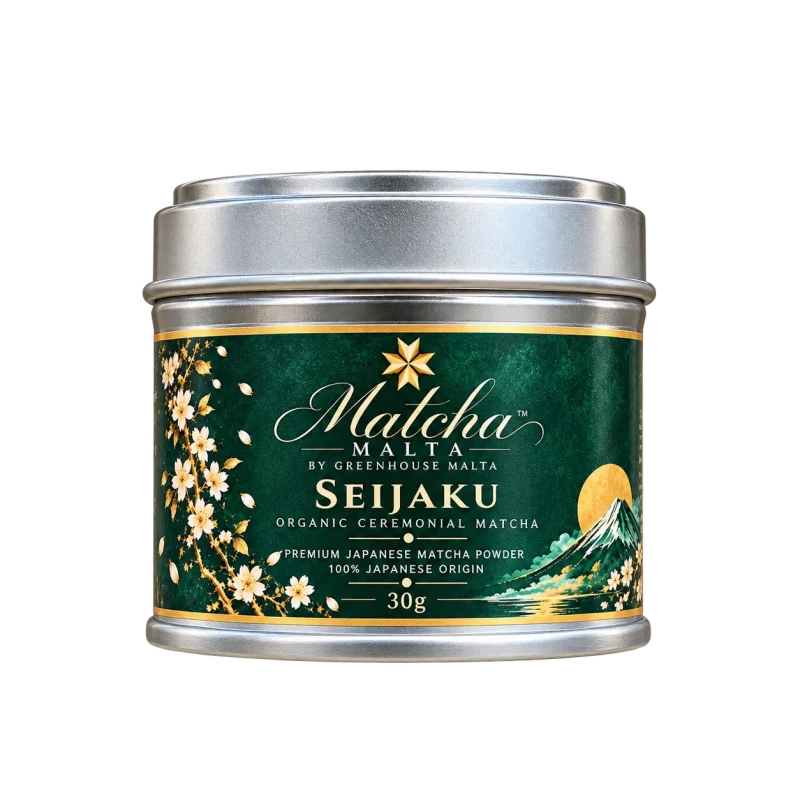
Seijaku™: Balanced Organic Ceremonial Matcha
Seijaku™ Organic Ceremonial Matcha is designed around balance.
Its profile combines smoothness, gentle umami, natural sweetness and controlled bitterness.
For someone looking for organic ceremonial matcha in Malta that can become part of a regular ritual, Seijaku offers an approachable entry into higher-quality matcha.
It can be enjoyed traditionally with water while remaining versatile enough for a refined latte.
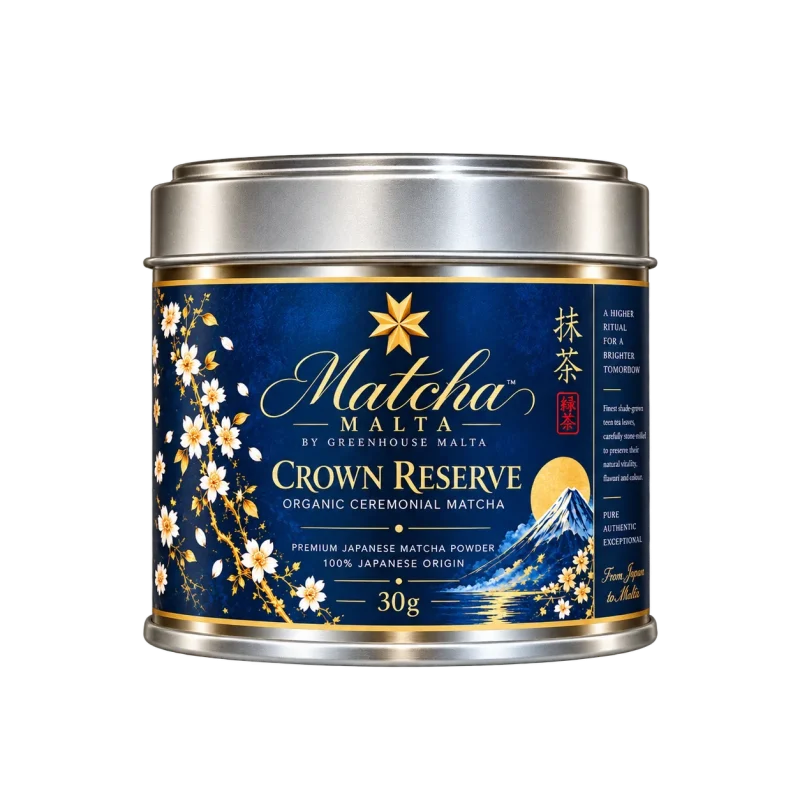
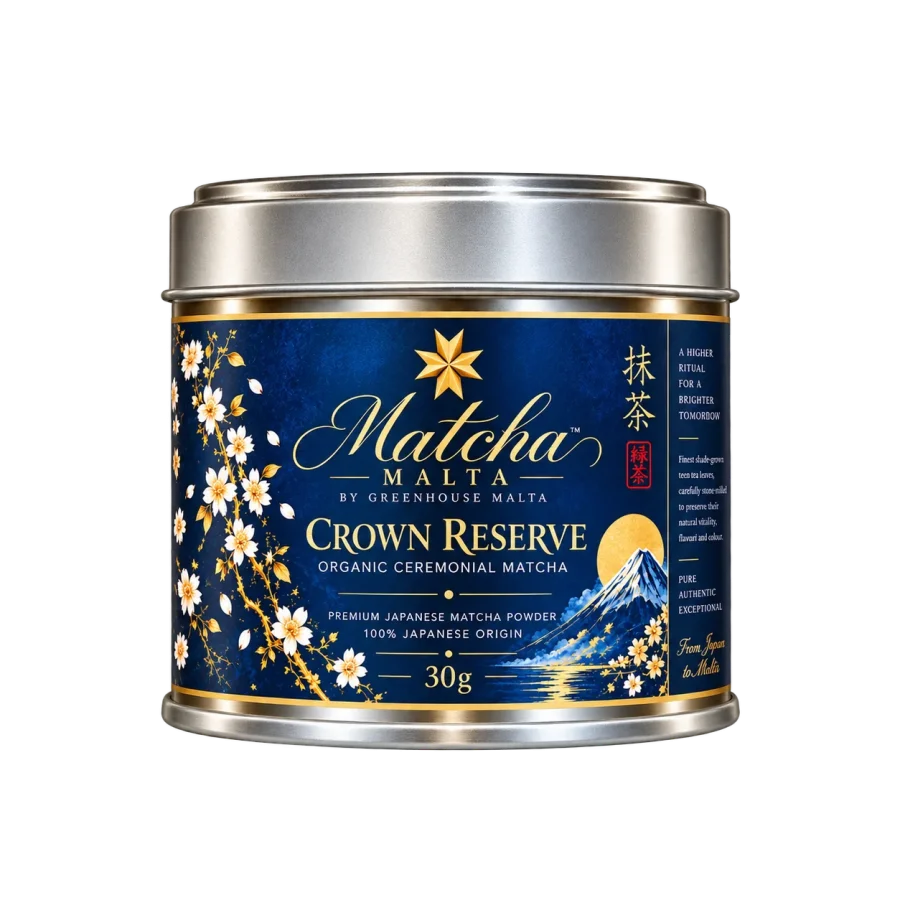
Crown Reserve™: Our More Refined Ceremonial Experience
Crown Reserve™ occupies a different position in our collection.
Here the emphasis moves towards deeper umami, silky texture, vibrant colour, natural sweetness and particularly low bitterness.
It’s the matcha we want people to slow down with.
Prepare it simply.
Taste it before adding anything.
A refined ceremonial matcha doesn’t need six pumps of syrup to justify its existence.
Organic Matcha: What Does It Tell You?
Organic certification and sensory quality answer different questions.
An organic designation relates to how a product is produced and certified according to applicable standards. It does not automatically tell you exactly how sweet, creamy or umami-rich a particular matcha will taste.
That’s why we don’t believe customers should choose matcha using a single word on the packaging.
Look at the complete product.
Its origin. Its appearance. Its intended use. Its flavour profile. How it is stored. And ultimately, how it tastes when you prepare it correctly.
Freshness and Storage Matter
Matcha is sensitive to air, heat, moisture and light.
Once opened, keep your matcha tightly sealed and stored somewhere cool and dry, away from direct sunlight and strong odours.
And please close the tin properly.
Buying beautiful Japanese matcha and leaving it open beside a sunny kitchen window is an impressively expensive way to decorate a countertop.
Where to Find Ceremonial Matcha in Malta
For customers searching for ceremonial matcha in Malta, Matcha Malta offers a dedicated selection through our online store.
We’re not trying to build an enormous catalogue containing every vaguely green powder we can find.
We would rather create a focused collection in which each matcha has a reason to exist.
Matcha Malta is part of Greenhouse Malta, giving our online matcha store a real physical presence in Malta as well.
That connection matters because tea is sensory.
Descriptions and photographs help, but ultimately matcha is something you smell, whisk and taste.
Which Matcha Should You Choose?
Start with how you drink it.
For a balanced organic ceremonial matcha suitable for a regular ritual, explore Seijaku™.
For a more refined ceremonial experience with deeper umami and very low bitterness, explore Crown Reserve™.
And if you’re primarily interested in lattes or everyday preparations, choose according to that purpose rather than automatically assuming the most expensive ceremonial option must be the best choice.
The right matcha isn’t necessarily the most expensive tin.
It’s the matcha you genuinely look forward to preparing tomorrow.
Matcha Malta: Bringing Better Matcha to Malta
Matcha deserves more than hype.
The deeper you explore it, the more interesting it becomes: different flavour profiles, preparation styles, textures and rituals can completely change the experience.
That’s what we’re building at Matcha Malta by Greenhouse Malta.
A dedicated destination for people who want to discover Japanese matcha in Malta, understand what they’re buying and gradually explore better tea.
From your first bowl to Crown Reserve, there’s always more to discover.